

If you’re going through a divorce and your immigration status depends on your marriage, timing matters. Divorcing before reaching certain immigration milestones can affect your ability to stay in the United States.
If you are going through the immigration process and you find yourself considering or facing a divorce, speaking with a local immigration lawyer at Shaheen & Gordon as early as possible can help you understand the potential consequences of future decisions.
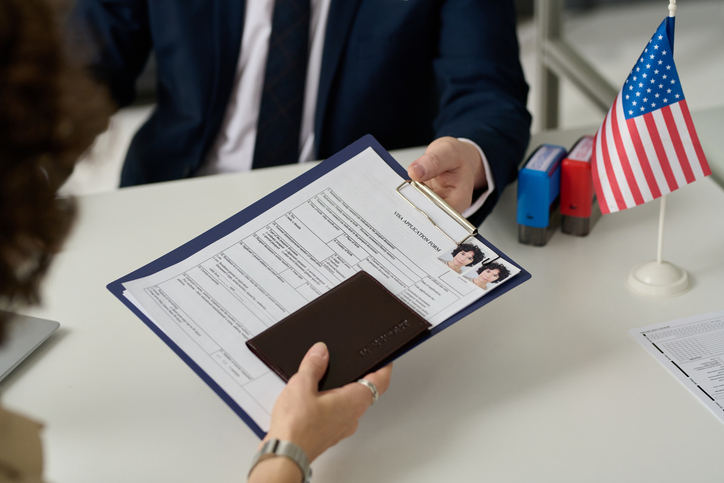
The impacts of divorce change at different stages of immigration
Divorce may have a different – or no – impact upon a person’s U.S. immigration status, depending on precisely where that person stands in the immigration process. Be it during the initial adjustment of status application, the petition to remove conditions of residence, permanent resident card [a.k.a., “green card”] renewal, or when applying for naturalization, divorce may have serious ramifications on your ability to navigate the process successfully.
If you have a conditional green card (two-year)
When a spouse-sponsored green card is granted within the first two years of marriage, it is issued as a conditional green card, valid for two years. No more than 90 days before it expires, the couple normally files Form I-751 jointly to remove the conditions and obtain a permanent (10-year) green card.
Separation/divorce during the conditional period changes everything. The conditional green card holder can no longer file Form I-751 jointly with their citizen spouse. Instead, they must request a waiver of the joint filing requirement. Common waiver grounds include:
- The marriage was entered in good faith but ended in divorce (good faith waiver)
- The immigrant spouse or a child was subjected to battery or extreme cruelty
- Removal would result in extreme hardship to the immigrant spouse
- The U.S. citizen spouse has died
For a good faith waiver, USCIS looks for evidence that the marriage was genuine when it was entered into, even if it didn’t last. Joint financial records, photographs, communications, lease agreements, affidavits from people who knew the couple, and more will support that claim.
If you have a permanent green card (10-year)
If conditions have already been removed and you hold a 10-year permanent green card, divorce generally has no direct effect on your green card itself. Maintaining lawful permanent resident status no longer depends on continuing to be married.
That said, divorce can affect naturalization eligibility. A permanent resident who is married to and living with a U.S. citizen can apply for naturalization after three years of permanent residence. If the marriage ends before the non-citizen spouse is naturalized, they will not be eligible to apply for naturalization until at least five years have passed since the initial green card approval. An applicant for U.S. citizenship must still satisfy all other requirements before being approved and taking the Oath of Citizenship.
If your adjustment of status is pending
If you’ve filed Form I-485 (adjustment of status) based on your marriage and the application is still pending, divorce before USCIS adjudicates the case typically eliminates permanent residence eligibility. Without a valid marital relationship, USCIS will deny the I-485.
There are limited exceptions. If the I-130 (Petition for Alien Relative) was approved before the divorce, some options may exist. A self-petition under the Violence Against Women Act [VAWA], discussed below, may be an available avenue if the applicant has been abused by the petitioning spouse.
If you’re applying for naturalization
Naturalization based on the 3-year marriage rule requires that you have been a permanent resident for at least three years, that you have been married to and living with the same U.S. citizen spouse during those three years, and that you remain married and living together when you file and when USCIS adjudicates.
If you divorce before applying or while the application is pending, the 3-year marriage rule no longer applies, since you are no longer married. As noted above, you will need to wait for naturalization until you meet the general 5-year residency requirement.
What if there has been abuse?
The Violence Against Women Act (VAWA) allows certain immigrants who have been subjected to battery or extreme cruelty by their U.S. citizen or permanent resident spouse to self-petition for status without the abusive spouse’s involvement. VAWA protections apply regardless of the immigrant’s gender.
VAWA self-petitioning can be filed before, during, or after a divorce. Filing for divorce does not by itself disqualify a VAWA self-petition, and confidentiality protections apply to the immigration process.
Does immigration status impact the divorce itself?
For New Hampshire residents, the divorce itself follows state law regardless of immigration status. NH divorces address property division (RSA 458:16-a), alimony (RSA 458:19-a), parental rights and responsibilities (RSA 461-A:6), and child support on the same legal standards for all couples. Citizenship status should not serve as a basis for decisions in any of these areas.
Divorce filings can have indirect immigration effects. Statements about the marriage, finances, living arrangements, or the nature of the relationship may later be relevant to USCIS or immigration court. Coordinating between divorce counsel and immigration counsel matters when both processes are active. A full service law firm such as Shaheen & Gordon, P.A. can help you navigate this process without the need to coordinate between multiple firms.
Talk to a New Hampshire immigration and family law attorney
When divorce and immigration overlap, the choices in one process can affect the outcome of the other. Coordinating immigration and family law attorneys who handle the intersection helps you see the full picture before any decision is made.
Shaheen & Gordon’s immigration team handles marriage-based green cards, conditional green card waivers (I-751), VAWA self-petitions, and adjustment of status proceedings. Our family law team handles divorce, parental rights and responsibilities, alimony, and property division across New Hampshire. The teams work together often.
Call (800) 451-1002 or contact us online to speak with a New Hampshire immigration or family law attorney about your situation.